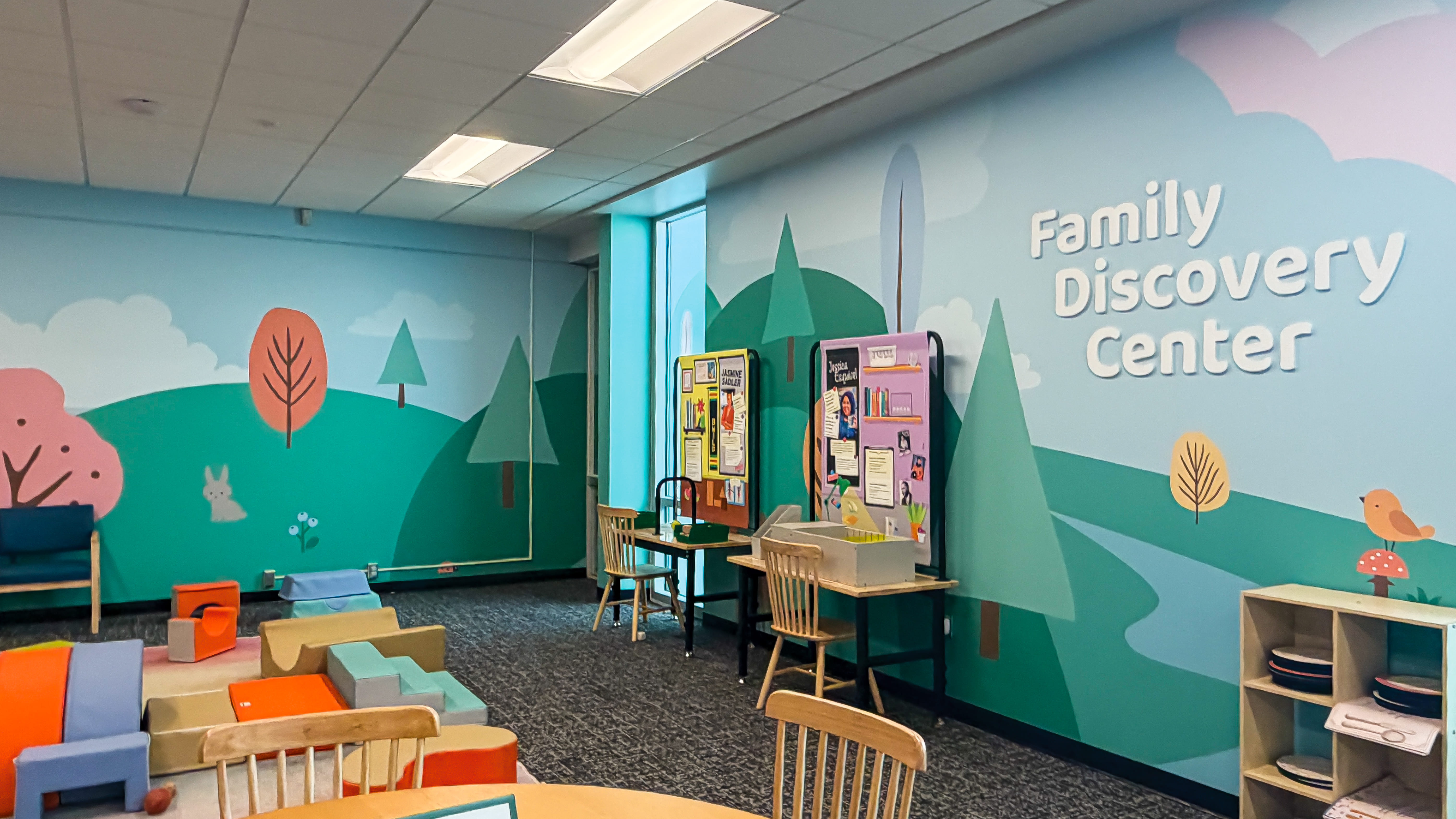
The Putnam Family Discovery Center invites young children and their caregivers to explore family through hands-on play. Designed for children ages 0–6, the environment brings together two activities: an interactive tree where visitors assemble families from magnetic figures, and a shared table where illustrated place settings encourage conversation.
As lead graphic designer, I developed a visual language connecting these experiences across the room. Bright colors, geometric forms and calmer backgrounds create an inviting setting that supports the activities without competing for attention.
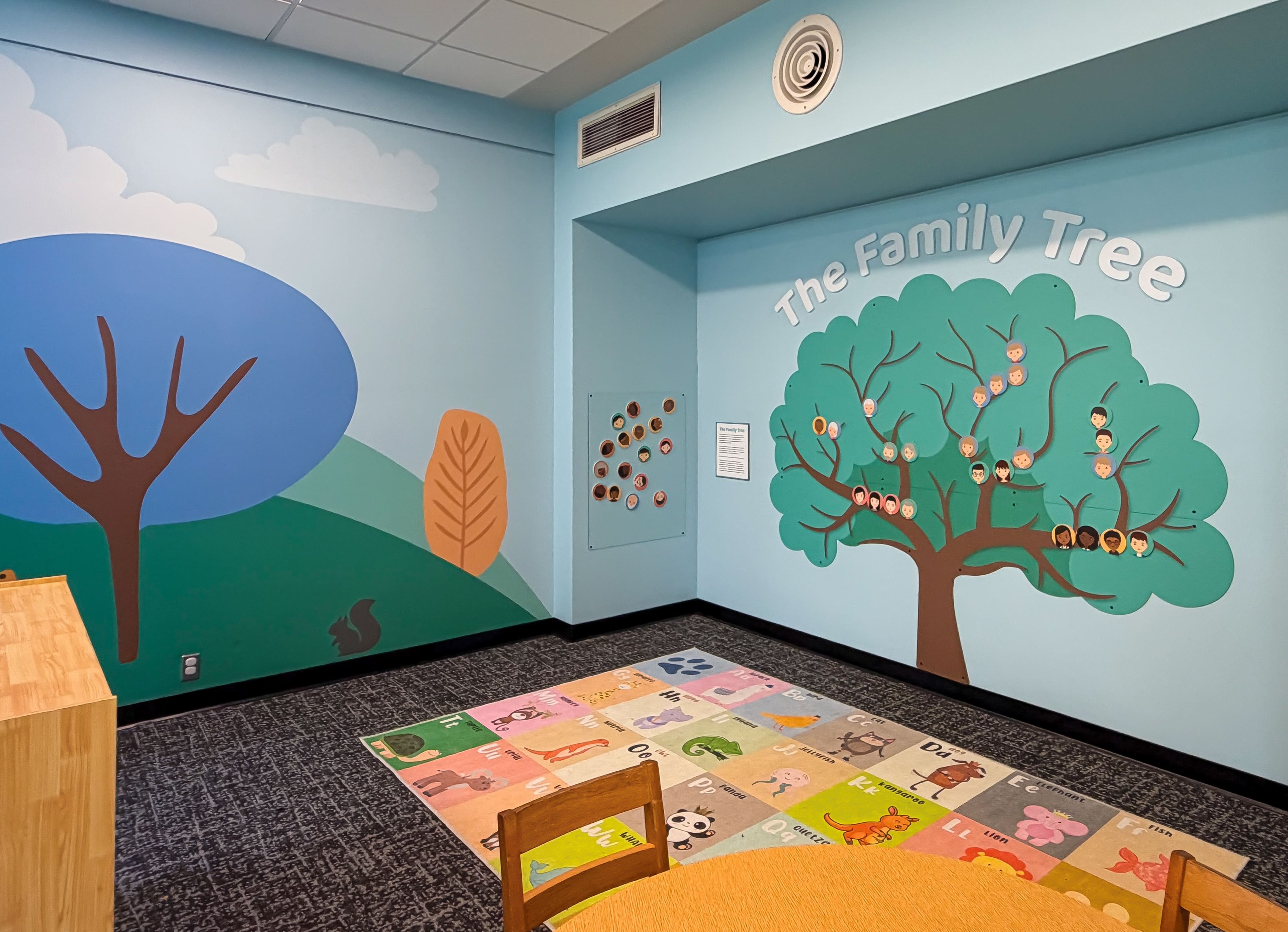
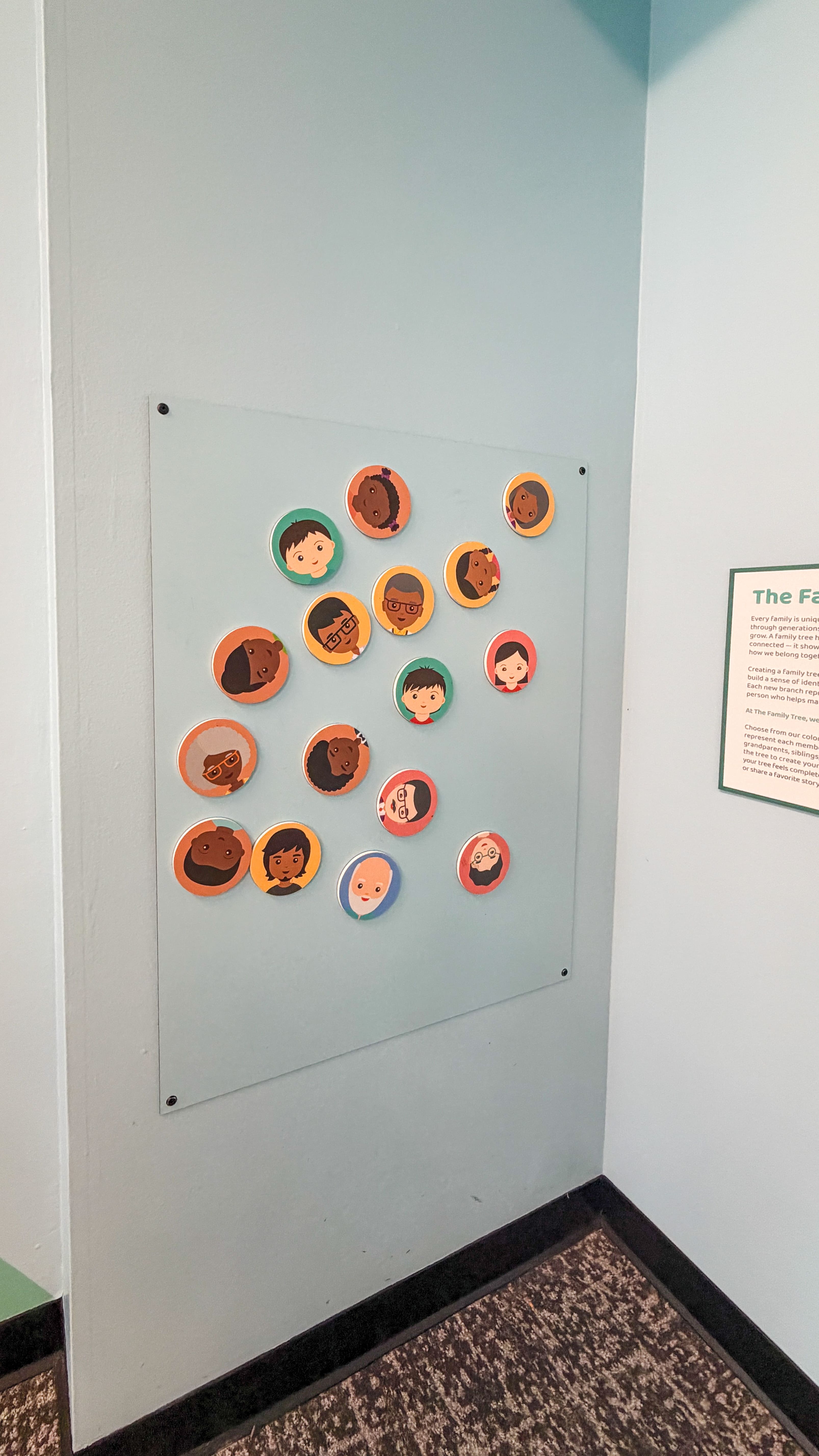
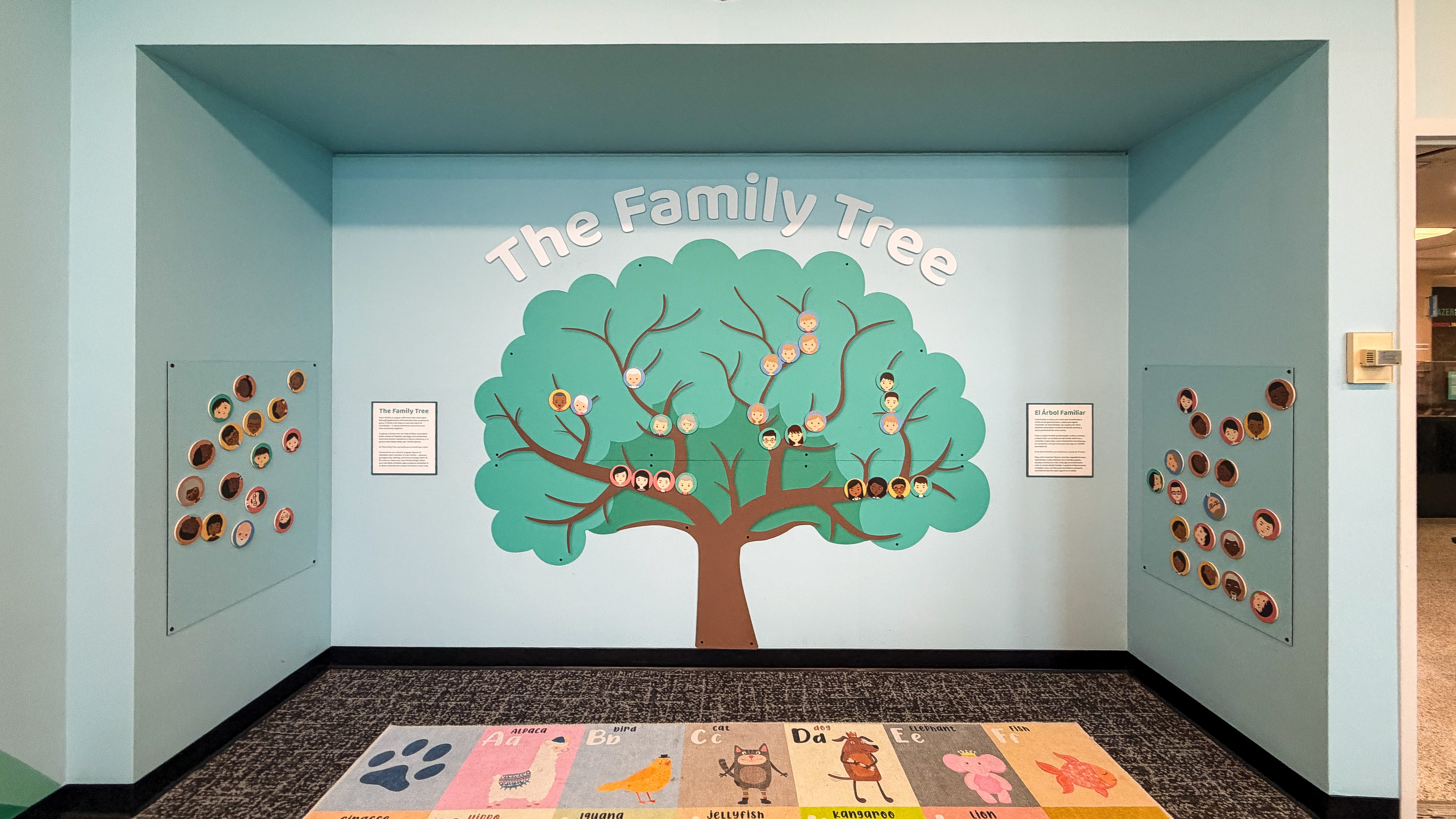
The family tree offers a diverse collection of magnetic figures that children can combine, rearrange and interpret. Rather than presenting one fixed picture of family, the activity leaves room for different ethnicities, relationships and family configurations. Visitors can represent people they know, imagine other families or simply explore the possibilities.
The surrounding graphics needed to support that openness while keeping the interaction clear. A calmer blue background grounds the colorful tree and figures, helping the active elements stand out. The result balances visual energy with enough simplicity for children to focus on the people they are placing.
Family is a familiar subject, but not a uniform experience. The environment gives visitors more than one way to approach it: making something, moving pieces, sitting together or sharing a story.
A shared idea of family—with room for each visitor’s own version.
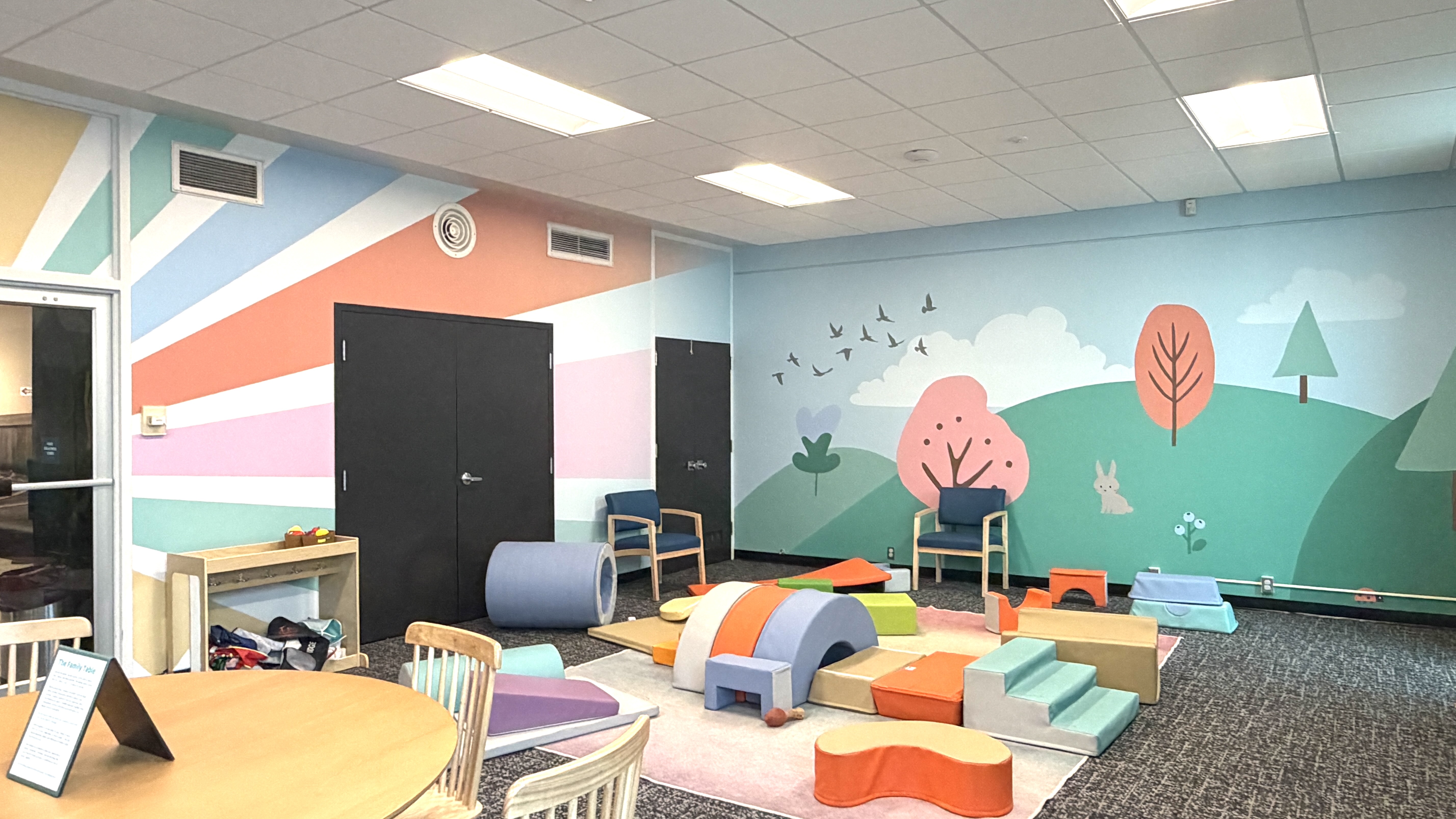
The visual system combines bright color blocking with simple geometric forms and quieter supporting areas. This balance was especially important around the family tree, where the illustration and magnetic figures already create a busy composition.
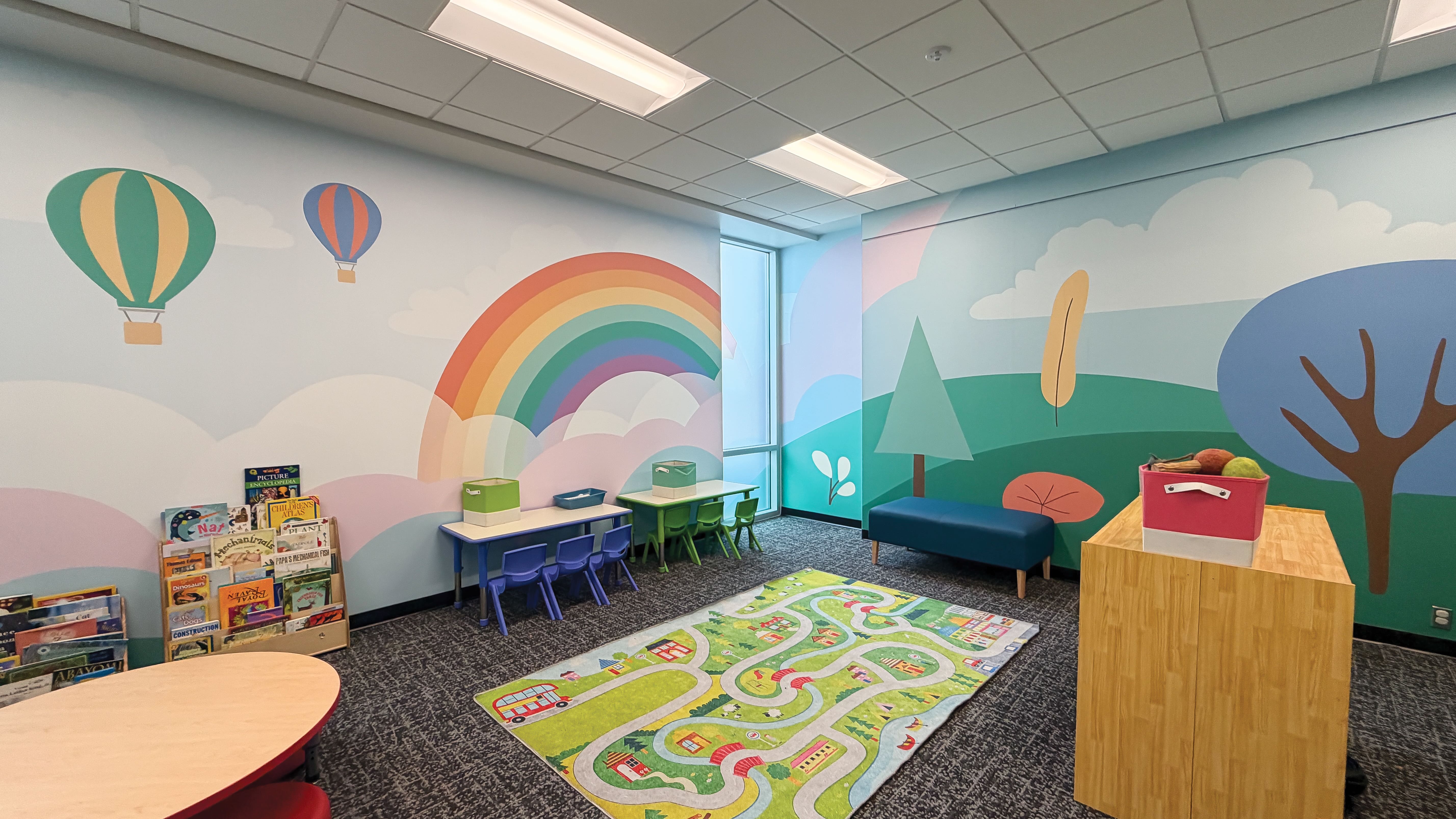
Across the room, related colors and shapes connect the wall wraps and activities into one environment. The graphics establish a welcoming character while allowing the interactive elements to remain the focus. Playfulness comes from the experience as much as the artwork.
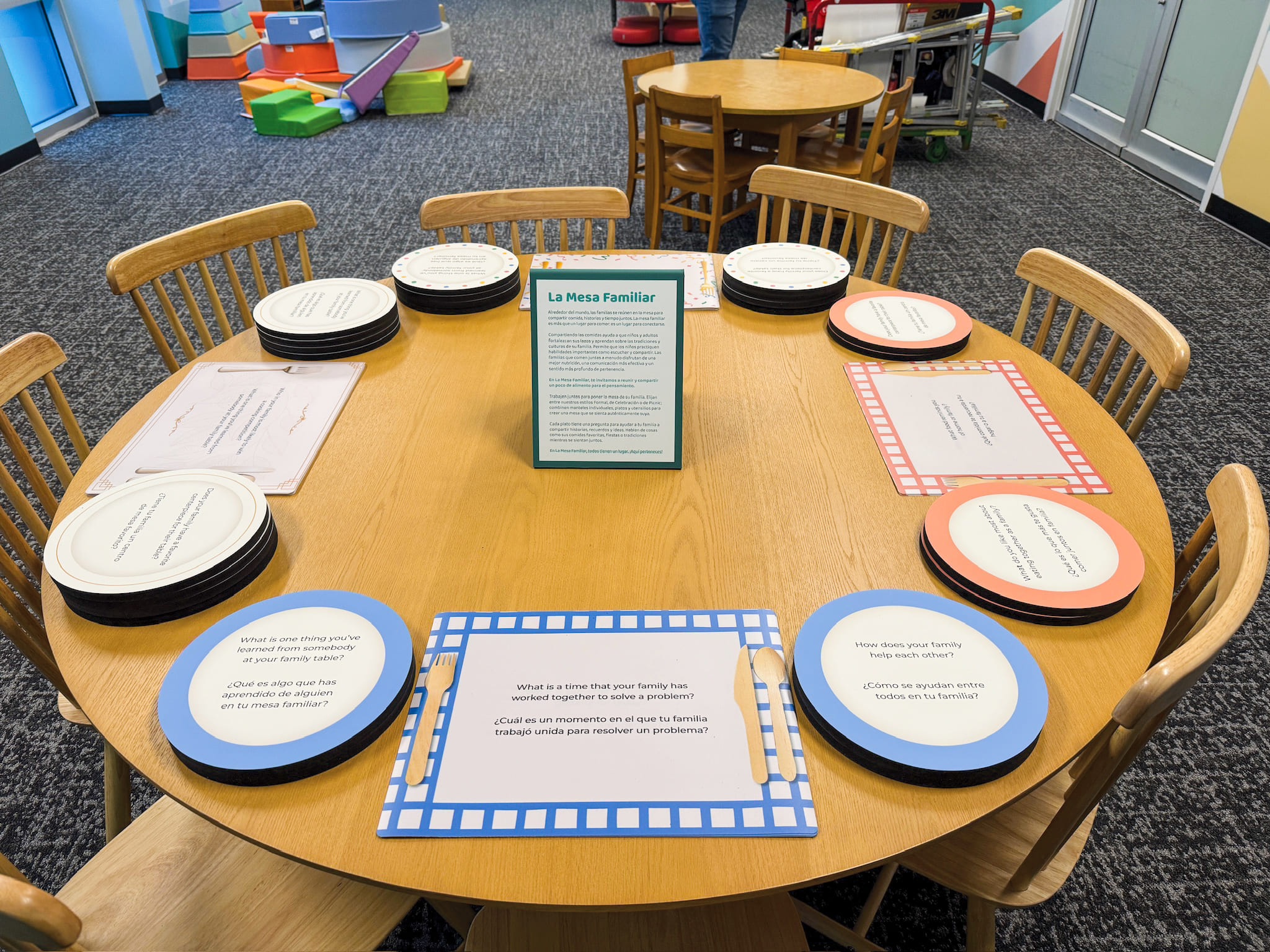
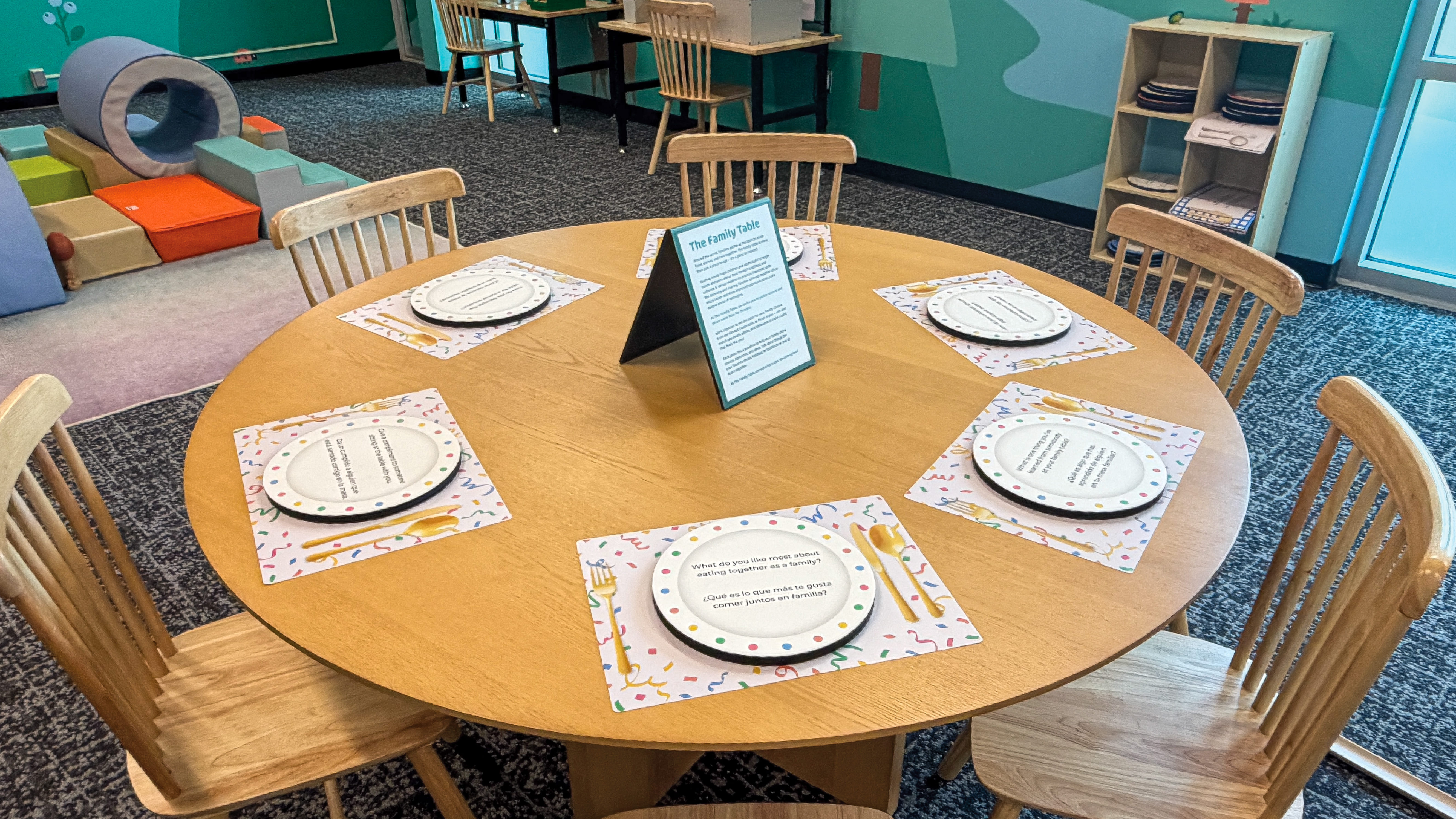
The family table shifts the experience from arranging people to connecting with them. Illustrated place settings introduce family-related prompts, inviting children and caregivers to sit together and share their own perspectives. A familiar everyday setting becomes a place for discovery, without making the conversation feel like a lesson.
The table graphics carry the room’s visual language into a smaller, more personal scale. Together, the tree and table offer complementary forms of participation: one is tactile and open-ended; the other creates space for conversation. Visitors can engage with either activity independently or move between them at their own pace.
Museum staff report that the Family Discovery Center has the longest visitor dwell time in the museum. That observation offers an encouraging response to a space designed around participation, shared attention and open-ended play.
For me, the project demonstrates how environmental graphics can help turn an abstract theme into something tangible. Color and illustration establish the atmosphere, but the experience takes shape through what visitors do: build a family, pull up a chair and bring something of themselves into the room.
Art direction, graphic & interactive design: Grant Swanson
Fabrication and museum collaborators: Edwards Creative